Collect Political Quotes
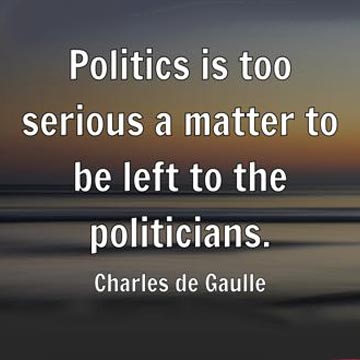
Collecting political quotes on a topic can be useful because it reveals how ideas, values, and power are expressed across time, perspectives, and voices. Quotes distill complex arguments into memorable language, making it easier to compare positions, notice patterns, and understand how rhetoric shapes public opinion. Bringing multiple quotes together also highlights contrasts—who is included, who is ignored, and how framing changes meaning—without requiring readers to wade through long texts. As a tool, a curated set of quotes can spark reflection, discussion, and deeper research while grounding conversations in documented, attributable viewpoints rather than abstract debate.
Some handy videos
Helpful steps
Choose a focused topic. Pick a clear theme or question so the quotes you collect speak to the same idea rather than feeling scattered.
Gather quotes from varied sources. Look at speeches, interviews, debates, articles, and historical texts to capture different voices and time periods.
Verify accuracy and context. Check that quotes are correctly attributed and understand when and why they were said.
Organize by theme or perspective. Group quotes to highlight contrasts, patterns, or shifts in rhetoric over time.
Add brief context if needed. A short note can help readers understand the significance without overexplaining.
Use the collection as a conversation tool. Share it to spark discussion, reflection, or deeper research rather than to declare a final conclusion.
Calm-Brains Mode
When making or releasing work—especially around charged topics—it helps to treat anger as information, not fuel. Notice it, write it down, and translate it into clarity rather than letting it take the wheel. Staying calm doesn’t mean dulling your message; it means giving it direction, so the work invites reflection instead of shutting people down. Create from a grounded place where curiosity, care, and intention shape the outcome, allowing your voice to be strong without becoming reactive.
Sharing your work and getting feedback before releasing it helps you see blind spots, clarify your message, and catch misunderstandings you didn’t intend. Early feedback isn’t about diluting your voice—it strengthens it by making sure what you meant is actually what others hear.
Resource Materials
The American Presidency Project – A comprehensive archive of U.S. presidential speeches, statements, debates, and remarks, ideal for sourcing accurate political quotes.
https://www.presidency.ucsb.edu/C-SPAN Video Library – Searchable transcripts and videos of congressional sessions, speeches, hearings, and public forums. https://www.c-span.org/
The Miller Center (University of Virginia) – Curated presidential speeches and historical context that help explain when and why quotes were given.
https://millercenter.org/the-presidency/presidential-speechesQuote Investigator – A fact-checking site that traces the origins, wording changes, and misattributions of famous quotes, including political ones. https://quoteinvestigator.com/
Library of Congress – American Memory & Digital Collections – Primary-source documents, speeches, letters, and historical records useful for deeper political quote research. https://www.loc.gov/collections/

How can you to be involved?
Help us raise awareness—explore creative ideas, learn more,
or support the work through our emporium.